Festivals / Culture & discoveries
Day of the Dead in Mexico: What the Altar Tells You Beyond the Parade
Understand Day of the Dead altars, public parades, and private remembrance, with guidance for respectful visits and photography.
 Yuna ·
Mexico · Mexico City and communities across the country
Day of the Dead
A celebration remembering the dead, with altars, food, flowers, and public events taking different forms across regions.
 View on the Festly map
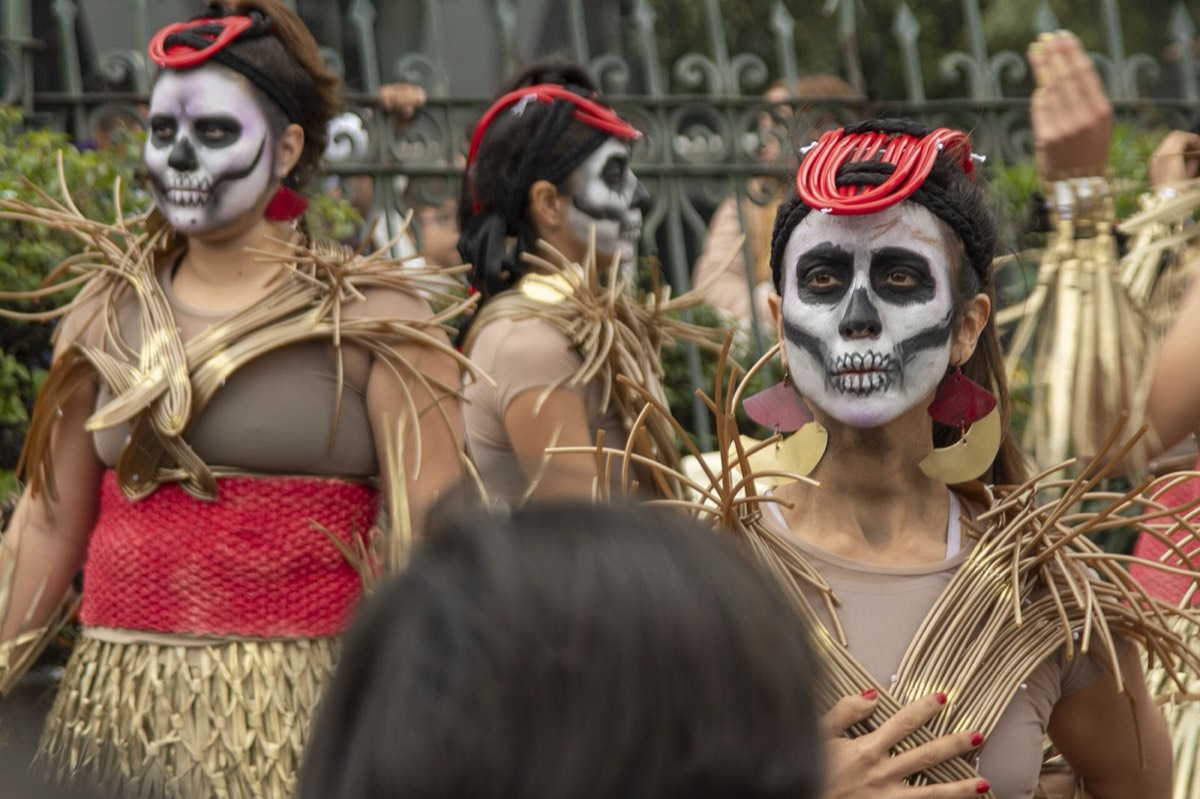
A photograph of skull makeup can be your first glimpse of Mexico’s Day of the Dead. Yet a trip spent only looking for elaborate costumes can miss its most personal question: who is an altar prepared for, and what did that person love?
UNESCO’s account of the related Indigenous festivity centers on the temporary return of deceased relatives. Flowers, candlelight, and offerings connect homes and graves; favorite dishes are placed on altars or at the cemetery. With that background, there is more to notice than a colorful spectacle.
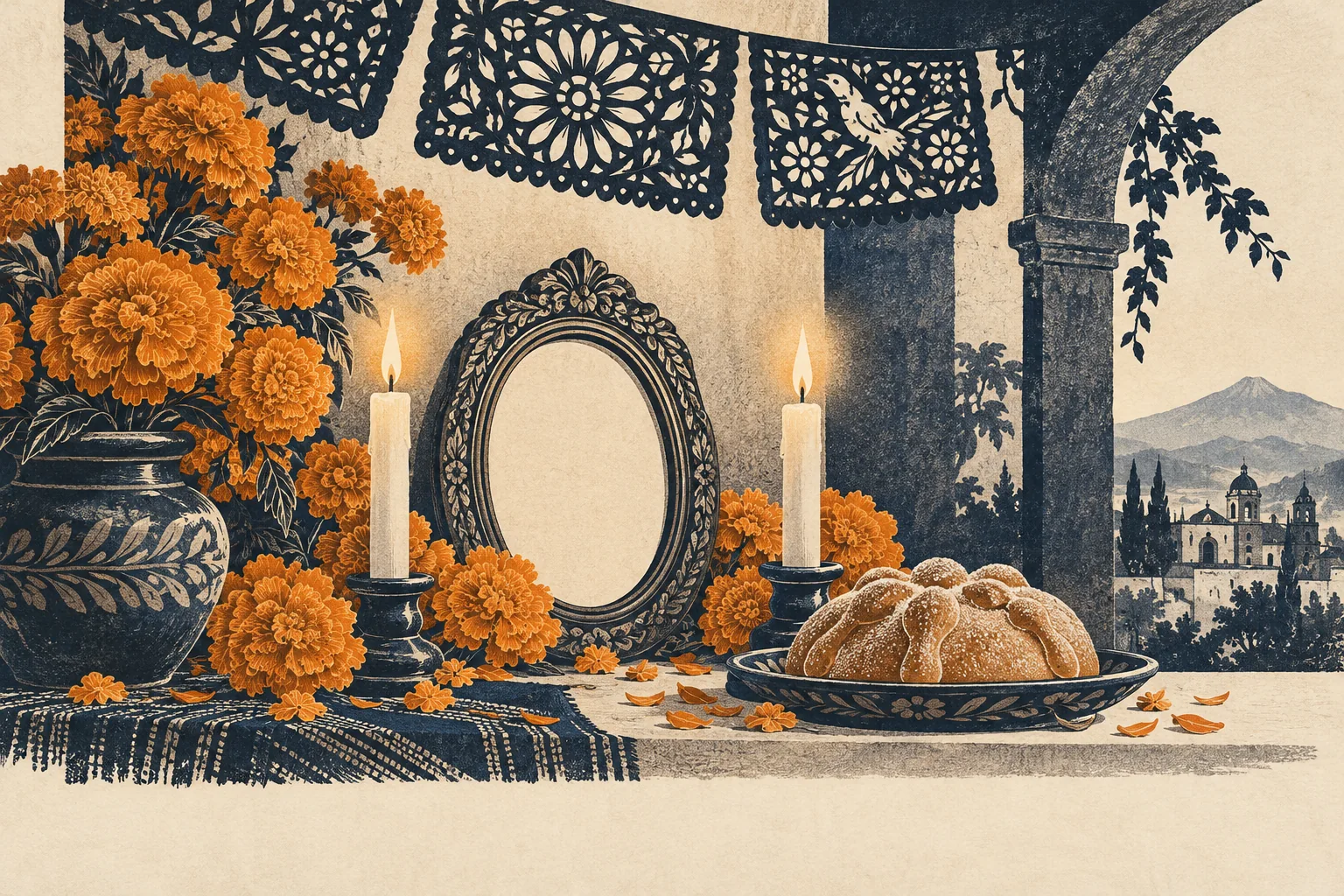
Whose favorite food is on the altar?
Start with one dish. In the tradition UNESCO describes, families prepare food the deceased enjoyed, alongside flowers, candles, and other offerings welcoming their temporary return. The food tells you more than what is served at the festival. It asks who this altar remembers, and what that person liked. The same dish on different altars may point toward different memories.
Flowers and candles can also make the welcome visible along a route. UNESCO describes petals, candles, and offerings placed between homes and cemeteries to help the dead return. Seen that way, an altar extends beyond a single table: the people remembering, the relative being welcomed, and the space between home and grave belong to the same occasion. This describes the practices in that cultural account, rather than a single arrangement followed by every household.
Practice reading photographs, corn, and marigolds on a 2010 museum altar
A documented historical display offers a way to practice reading these connections. Mexico’s Ministry of Culture described a 2010 altar at the National Museum of Interventions marking the Mexican Revolution’s centenary. It remembered ordinary participants as well as prominent leaders, with photographs of revolutionary figures forming the central composition. The photographs first answered “for whom?” so visitors could see more than decoration.
The display also included food eaten by participants in the Revolution, such as ears of corn, bringing those historical figures back into everyday life. The museum explained the marigolds in this particular altar as a path for visiting souls. Photographs identified the people, food recalled daily life, and flowers expressed a welcome. Together, they explained why that display took its form. It is a specific 2010 example, rather than an exhibition you can visit this year or a universal dictionary for Mexican altars.
I like to understand those relationships before concentrating on shape and color. At another public altar, follow its explanation of the people remembered, the offerings, and the curatorial choices. Regions, communities, and families arrange things differently. Where no explanation is offered, leave room for not knowing instead of inventing someone else’s story.
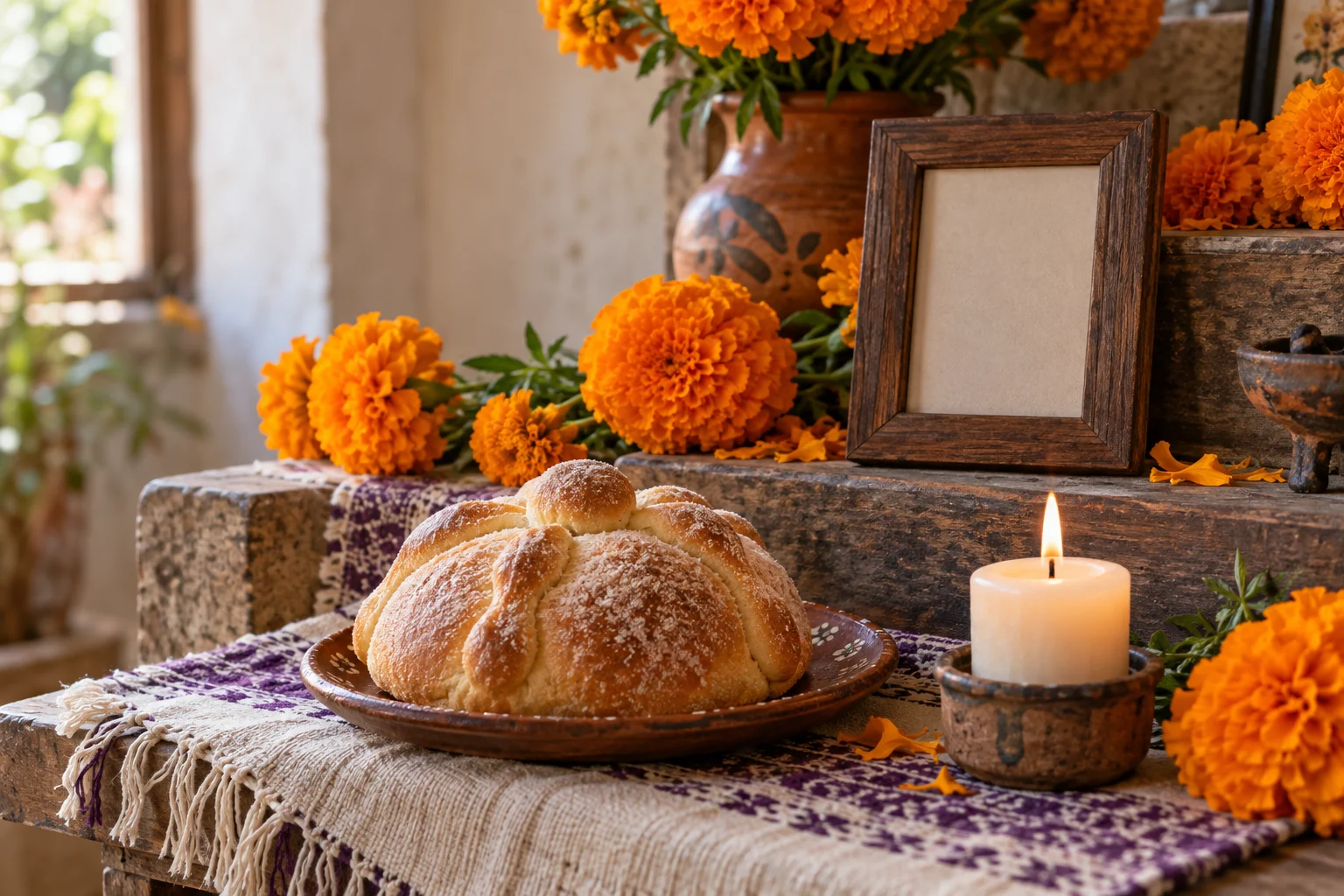
Public displays, parades, and family remembrance call for different attention
| Setting | What to notice first | What to establish before visiting |
|---|---|---|
| Public altar display | Explanations, the people remembered, and its design | Public access, photography rules, and tickets |
| Street activity or parade | Organizer, groups, and public route | Current-year times, route, and transport notices |
| Family altar or cemetery remembrance | What the people present are doing | Whether you are invited, and permission to approach or photograph |
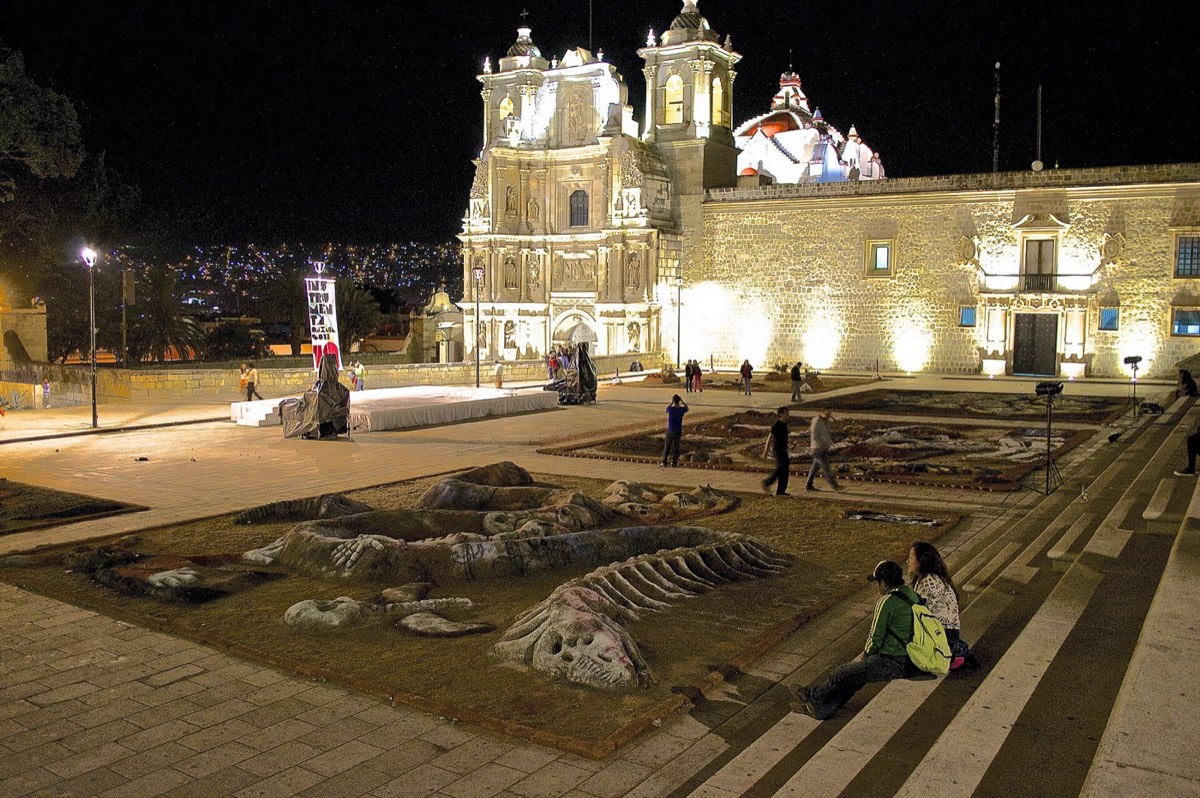
For offerings, find an altar with interpretation; for processions, plan around a named parade
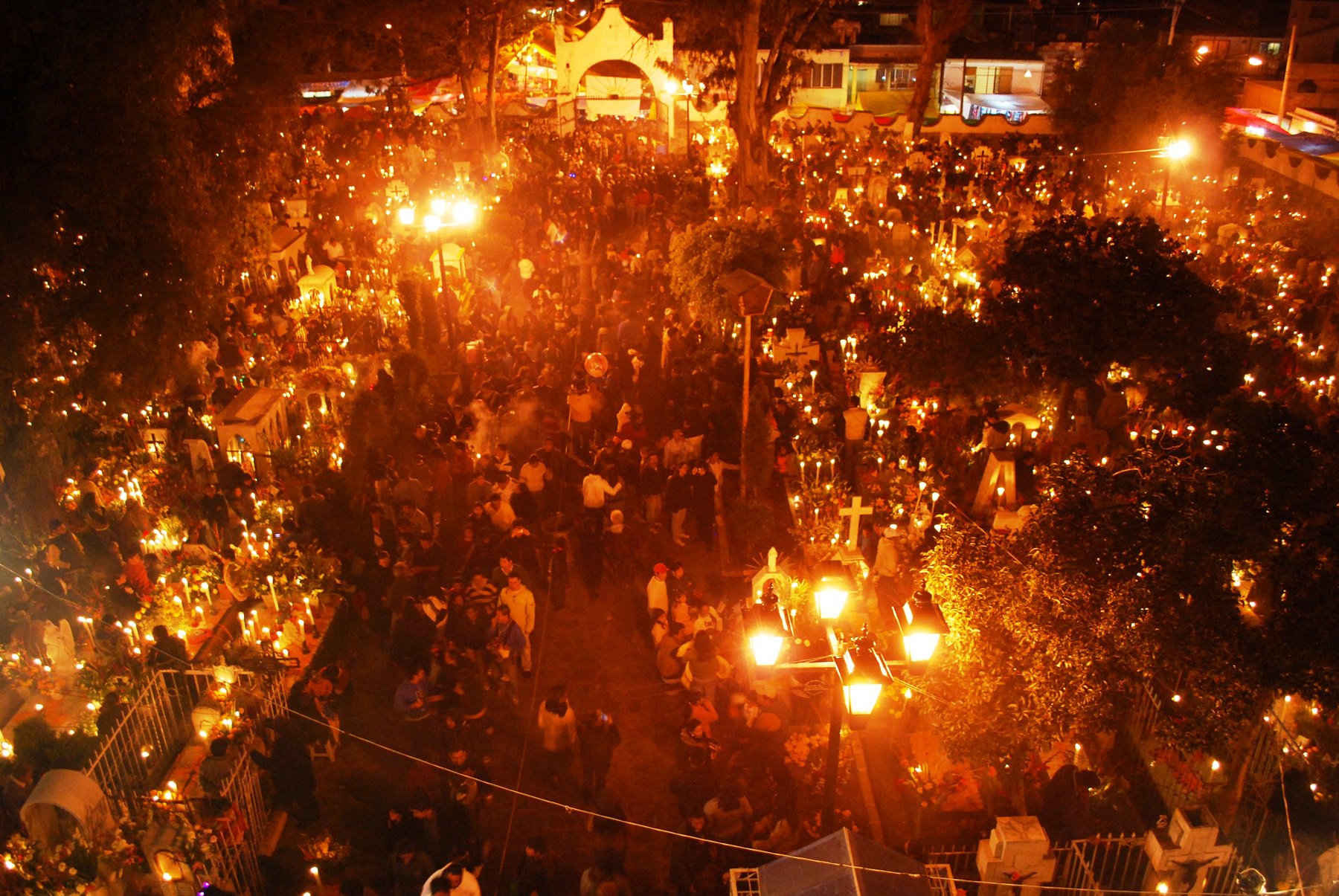
An altar can hold attention on one person, a shared memory, or a community. A parade asks you to follow a public program and its groups. Both can belong in a Day of the Dead trip, but each offers something different. To understand offerings, choose a public altar with interpretation. If processions and costumes are your priority, build the day around a named parade. For a candlelit vigil in a cemetery, consider Mixquic on Mexico City’s southeastern edge; A Night in Mixquic for Day of the Dead covers the journey there and back.
Mexico City’s street photographs and the Oaxaca scene shown here can inform the same cultural introduction. They cannot form one evening’s walking route. Pick the city first, then consult its cultural institutions, venues, and organizers. A popular video from one place is no reason to expect the same event in every city.
The season runs from late October into early November, but each year’s parade needs its own date
UNESCO places the traditional period broadly in late October and early November. That explains the season, while a particular year’s city parade needs its own date. Before booking, identify the full event name, city, year, access arrangements, and opportunities for ordinary visitors.
This is a year-round cultural introduction. For an upcoming trip, use the Festly Day of the Dead map to understand the city’s location, then return to local official announcements. Leave an unhurried stretch for looking at an altar as well as time for the parade.
Related places
Mexico City — public-event city location
Open in Google Maps ↗Oaxaca City — a different festival setting
Open in Google Maps ↗Related experiences
 Klook
Mixquic Day of the Dead cultural trip from Mexico City
Travel from Mexico City to San Andrés Mixquic, with transportation and time to explore independently.
This is not a fully accompanied guided tour or a private invitation to family altars. Check festival dates, the meeting point, and the nighttime return separately.
View experience

Mixquic Day of the Dead private tour
A private trip focused on Day of the Dead culture and places of remembrance in Mixquic; compare available languages and departure arrangements.
This is not a downtown Mexico City parade ticket. An available booking date does not guarantee a particular ritual; respect the families you encounter.
View experienceDates, availability and inclusions are subject to the provider’s page.
Nearby stays

 Trip.com
Gran Hotel Ciudad de México — Zócalo
Beside the Zócalo in Mexico City’s historic center, offering a base for downtown public events and cultural sights.
This hotel is not in Mixquic or Oaxaca. For an excursion, separately confirm the pickup or meeting point and return journey.
View rooms
Histórico Central — Mexico City historic center
A hotel in a converted historic building on Simón Bolívar street, suited to walking routes linking old-city architecture and cultural sights.
This is accommodation in Mexico City’s historic center, not at a cemetery or in other local communities. Arrange transportation to Day of the Dead activities separately.
View roomsRates, room availability and cancellation terms are subject to the provider’s page.
Frequently asked questions
Is Day of the Dead Mexico’s Halloween?
That comparison misses its meaning. UNESCO describes related Indigenous festivities as remembering the dead and welcoming the temporary return of deceased relatives. Street costumes cannot represent the entire celebration.
Is the food on an altar just decoration?
In the traditions UNESCO describes, offerings include dishes the deceased enjoyed in life. Together with flowers, candles, and other offerings, they express welcome and remembrance. Arrangements differ among communities.
May I photograph family altars or cemeteries?
Check the venue’s rules and obtain the people’s consent first. Public displays, family rituals, and private mourning in cemeteries are different settings. An invitation to a public event does not grant access or photography permission everywhere.